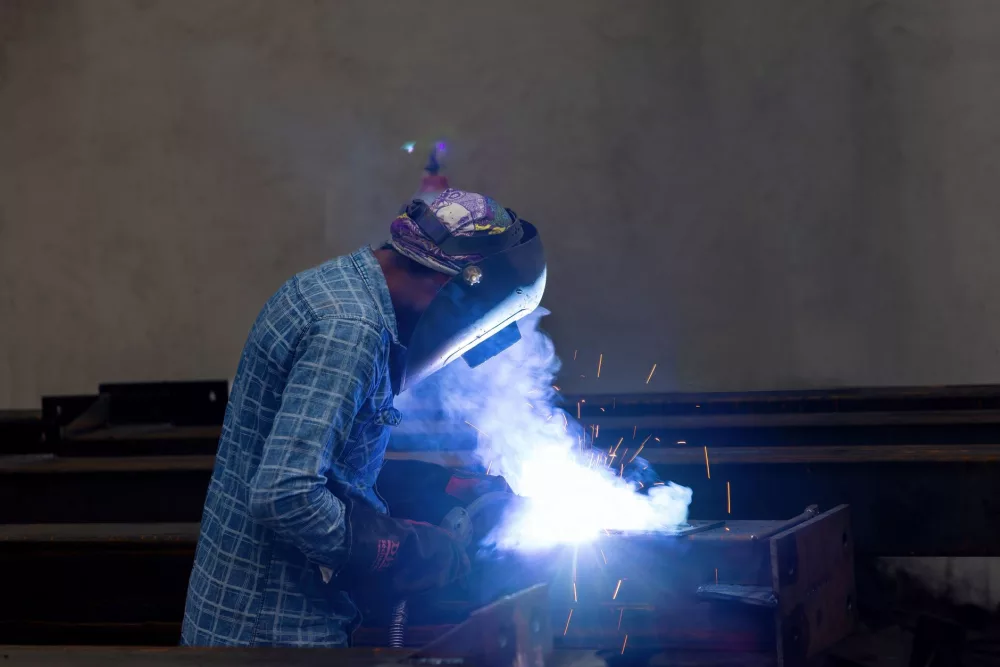
When I think about the term "blue collar," my mind doesn't just conjure an image of a denim shirt; it immediately jumps to the sheer backbone of society, to the folks who quite literally build, maintain, and power our world. It's a phrase we often hear, but I sometimes wonder if we truly appreciate the depth and significance it carries. It's more than just a job category; it's a legacy, a culture, and a vital economic force.
Understanding the Blue-Collar Identity
So, where did this term even come from? Historically, it dates back to the early 20th century, particularly within industrial settings. Manual laborers, working in environments that were often dirty and demanding, found practical utility in wearing durable, dark-colored clothing like denim or chambray shirts. These clothes wouldn't show dirt and grease as readily as the white shirts favored by office workers or managers. That contrast—the blue shirt versus the white shirt—really cemented the distinction between manual labor and administrative work. I find it fascinating how a simple clothing choice could become such a powerful identifier.
For me, the blue-collar identity is intrinsically linked to hands-on work. These are the jobs that require physical effort, specialized vocational skills, and often, a direct engagement with tangible outcomes. We're talking about tasks that are essential for the functioning of our daily lives, many of which are often taken for granted until they stop working.
The Diverse Landscape of Blue-Collar Work
The range of blue-collar professions is incredibly broad, far more expansive than many people might initially imagine. It's not just factory floors anymore, although manufacturing certainly remains a significant component. Think about it:
- Construction workers, who erect our skyscrapers and lay our roads.
- Electricians, keeping our homes and businesses lit and powered.
- Plumbers, ensuring our water flows cleanly and drains efficiently.
- Mechanics, who get us back on the road when our vehicles fail.
- Welders, joining metal to create everything from pipelines to bridges.
- Truck drivers, who are the lifeblood of our supply chains, moving goods across vast distances.
- HVAC technicians, maintaining comfortable temperatures in our environments.
- Maintenance crews, keeping public spaces and facilities operational.
- Sanitation workers, performing one of the most critical, yet often overlooked, services for public health.
Each of these roles, and countless others, demands a unique skill set, a strong work ethic, and often a level of problem-solving that goes unnoticed by the casual observer. I've always admired the practicality and ingenuity these jobs require.
Skills, Training, and the Path to Mastery
One common misconception I've noticed is that blue-collar jobs don't require much education or skill. That simply couldn't be further from the truth! While a four-year university degree isn't typically the entry point, these professions absolutely demand rigorous training and continuous learning. In my experience, the skills acquired are often incredibly specialized and sophisticated.
Many blue-collar careers begin with vocational training programs or community college courses. These programs are fantastic because they focus intensely on practical, job-specific skills. Students learn the tools of the trade, safety protocols, and theoretical knowledge that's directly applicable to real-world scenarios. Then there are the apprenticeships—a system I truly believe in. Apprenticeships pair aspiring tradespeople with experienced mentors, providing invaluable on-the-job training. You learn by doing, under the watchful eye of someone who's mastered the craft. This kind of experiential learning creates incredibly competent professionals. It's a process of becoming an expert, of truly knowing your craft.
These aren't just muscle jobs; they involve complex diagnostics, precision work, adherence to stringent codes, and an understanding of sophisticated machinery. An auto mechanic today, for instance, needs to be as adept with a diagnostic computer as they are with a wrench. It's a constant learning curve.
Challenges and Shifting Perceptions
Despite their undeniable importance, blue-collar professions have faced their share of challenges. For a while, I think there was a societal push, maybe even an unconscious bias, suggesting that a university degree was the *only* path to success or respectability. This led to a subtle, and sometimes not-so-subtle, devaluation of vocational careers.
Economic shifts have also impacted these roles. Automation, while creating new jobs in some areas, has undoubtedly transformed manufacturing and other sectors, requiring workers to adapt and reskill. There are also the inherent physical demands; many blue-collar jobs are tough on the body, involving heavy lifting, awkward positions, or exposure to environmental hazards. Safety, while constantly improving, remains a paramount concern.
But I'm starting to see a positive change in perception, which is really encouraging. People are recognizing the immense value and critical necessity of these skilled trades. With student loan debt soaring and a real demand for skilled labor, vocational paths are increasingly being viewed as smart, financially sound career choices. It's about time, if you ask me.
The Indispensable Value They Provide
Ultimately, blue-collar workers are the bedrock of our modern society. They are the ones who literally keep the lights on, the water running, our vehicles moving, and our infrastructure sound. Without their expertise, dedication, and sheer hard work, our comfortable, technology-driven lives would simply grind to a halt. I often reflect on how much we rely on these individuals every single day.
There's a deep sense of pride that comes with blue-collar work. It's the satisfaction of seeing a building you helped construct, a machine you repaired, or a system you installed working perfectly. This tangible outcome, this direct contribution, fosters a unique kind of professional fulfillment. I believe this sense of accomplishment is something truly special.
As we look to the future, I feel it's essential that we continue to champion and support these professions. Investing in vocational training, promoting apprenticeships, and challenging outdated stigmas are all crucial steps. The blue-collar workforce isn't just surviving; it's evolving, adapting, and continuing to be an absolutely indispensable force in shaping our world. They're not just workers; they're innovators, problem-solvers, and the quiet heroes of our economy. And that, in my opinion, is something worth celebrating.